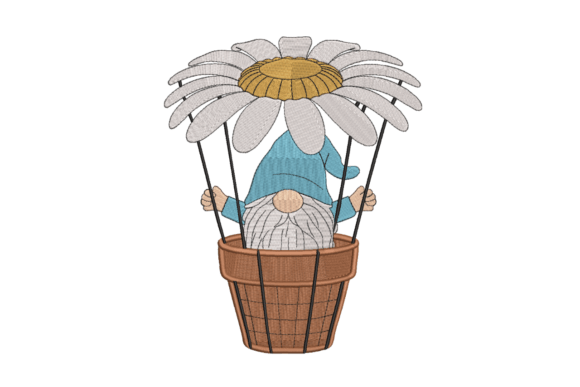
Daisy Gnome Hot Air Balloon Review
As a designer who spends more time than I care to admit staring at stitch charts and testing thread tensions, I approach every new embroidery file with a mix of hope and skepticism. The market is flooded with generic clip art disguised as digitized designs, but occasionally, something catches the eye for its genuine charm and technical viability. That was my reaction when I first laid eyes on the Daisy Gnome Hot Air Balloon. It isn’t just another seasonal novelty; it feels like a cohesive piece of art that understands the medium it lives in.
I decided to put this machine embroidery design through its paces before recommending it to my network of small business owners and fellow crafters. My goal was to determine if this design holds up under real-world conditions—specifically, how it translates from a digital preview to a tangible, sellable handmade product.
The First Impression: Mood and Visual Personality
Spring often brings a flood of floral motifs, but the Daisy Gnome Hot Air Balloon stands out because it balances whimsy with structure. The character itself exudes a friendly, approachable vibe, while the hot air balloon element adds a sense of adventure and lightness. Visually, the layout is well-proportioned. It doesn’t feel cramped or overly sparse. The stitch density appears balanced, suggesting that the designer understood the importance of negative space and stitch direction.
For those of us creating custom apparel or boutique items, visual appeal is paramount. This design has a distinct personality. It’s not aggressive or overly complex; rather, it invites interaction. When I look at the preview, I can already imagine how customers will react. It triggers a nostalgic, cozy feeling that works exceptionally well for gifts. The color palette implied by the name suggests soft pastels and bright accents, which naturally aligns with the spring season without being cliché.
Real-World Application: Where Does It Fit?
To truly evaluate an embroidery project, you have to think about where it will live. I ran several mental scenarios for the Daisy Gnome Hot Air Balloon, focusing on products that are currently trending in the Etsy seller community and local craft fairs.
- Custom Tote Bags: This is perhaps the most obvious application. A canvas tote featuring this gnome would make a fantastic gift for teachers, librarians, or anyone who appreciates cute stationery. The balloon shape provides a nice focal point that doesn’t get lost on the large surface area of a bag.
- Sweatshirt Embroidery: For cooler spring days or transitional weather, this design would look adorable centered on the chest of a crewneck sweatshirt. The whimsical nature of the gnome pairs perfectly with the comfort aesthetic of knit fabrics.
- Baby Embroidery: Small children’s items require designs that are gentle and non-intimidating. The rounded shapes of the balloon and the gnome’s hat make this safe and appealing for nursery decor, baby blankets, or christening gowns.
- Aprons and Kitchen Towels: If you run a craft business focused on home goods, this design adds a touch of humor and warmth to kitchen textiles. It fits the "modern farmhouse" or "cottagecore" aesthetics that remain popular among consumers.
- Embroidered Patches: Because the design has a clear central focus, it translates well into a patch format. These are high-margin items for small shop products that can be attached to denim jackets, backpacks, or beanies.
In each of these scenarios, the Daisy Gnome Hot Air Balloon elevates the perceived value of the item. It transforms a plain commodity into a personalized gift. Buyers are willing to pay more for uniqueness, and this design delivers that distinction.
Technical Considerations and Stitch Clarity
While the aesthetic is strong, a designer’s job is to ensure the design stitches cleanly. From what I can observe, the Daisy Gnome Hot Air Balloon utilizes a mix of satin stitch for outlines and details, and fill stitch for larger areas like the balloon basket or the gnome’s clothing. This combination is generally reliable, provided the digitization was done with proper pull compensation.
However, there are areas where caution is required. If you plan to use this for commercial embroidery on delicate fabrics, you must consider the fabric texture. On highly textured materials like bouclé or heavy waffle weaves, the fine details of the gnome’s face or the balloon ropes might get lost. In such cases, the thread colors need to have high contrast against the background to maintain visibility.
Another critical factor is the hoop size. While the design likely fits standard hoops, always verify the dimensions before starting production. If you are embroidering on curved surfaces like caps or hats, the distortion can affect the symmetry of the balloon. Testing on scrap fabric is non-negotiable here. You want to ensure that the running stitch elements don’t pucker the fabric, especially if you are using thin cottons or linens.
When to Use This Design Carefully
Not every product is a good match for every design. Here are specific situations where you should exercise judgment:
- Small Hoop Sizes: If your machine only supports very small hoops, ensure the design scales down without losing legibility. Tiny text or intricate facial features can become muddy if the resolution is too low.
- Stretchy Fabrics: Knits like jersey or spandex blends require a strong stabilizer to prevent shifting. Without proper support, the embroidery project may look misaligned after washing.
- Dense Stitch Areas: If the design has concentrated areas of thread, it may create a stiff spot on the fabric. This is less ideal for items that need to drape softly, like lightweight scarves or baby onesies.
- Frequent Washing: For items like aprons or dish towels that will undergo rigorous laundering, check the durability of the threads. Synthetic threads generally hold up better than cotton in high-friction areas.
Impact on Brand Consistency and Customer Trust
For creative entrepreneurs and digital product sellers, consistency is key to building a brand. Using a well-executed design like the Daisy Gnome Hot Air Balloon signals professionalism. It shows that you care about quality and attention to detail. When customers receive a finished product that looks crisp and polished, their trust in your brand increases, leading to repeat purchases and positive reviews.
Furthermore, this design is highly "gift-ready." In the age of social media, products that look photogenic perform better. The cheerful theme of the gnome and the balloon creates a natural storytelling element. You can easily build marketing content around spring renewal, childhood wonder, or thoughtful gifting. This emotional connection drives engagement and helps your design assets stand out in a crowded marketplace.
Practical Designer Notes for Implementation
Before you commit to mass production or listing this on your shop, follow these practical steps to ensure success:
- Test on Scrap Fabric: Always stitch a sample on the exact fabric you plan to use. This reveals issues with tension, stabilizer choice, or thread compatibility that aren't visible in digital mockups.
- Check Thread Contrast: View your design in black and white. If the contrast between the main elements and the background is weak, the design will lack impact. Adjust your thread colors accordingly.
- Confirm Licensing: If you intend to sell finished items, verify the commercial use rights of the digital embroidery file. Some licenses restrict the number of units you can produce.
- Use Proper Stabilizer: The right stabilizer makes or breaks an embroidery project. For woven fabrics, cut-away stabilizers offer long-term stability, while tear-away may suffice for temporary projects.
- Inspect Small Details: Zoom in on the digitization. Are the satin stitch angles optimized? Are there any loose ends that might snag? A clean finish is what separates amateur work from professional output.
The Daisy Gnome Hot Air Balloon is a versatile, charming addition to any designer’s library. It bridges the gap between playful character design and functional embroidery art. Whether you are creating a one-off personalized gift or scaling up a line of spring-themed merchandise, this design offers a solid foundation for creativity. Just remember: great results come from careful preparation and respect for the craft. Test thoroughly, choose your materials wisely, and let the design shine.